Bank account in Thailand: what to consider
We winter in Phuket, and a local account held up our whole move-in: the first bank turned us away on a tourist visa, the second asked for a Certificate of Residence we didn't have. Here's how opening a bank account in Thailand actually works in 2025 — why a tourist visa isn't enough, which banks are friendlier to foreigners, and what to prepare in advance. Facts with caveats, no promises.
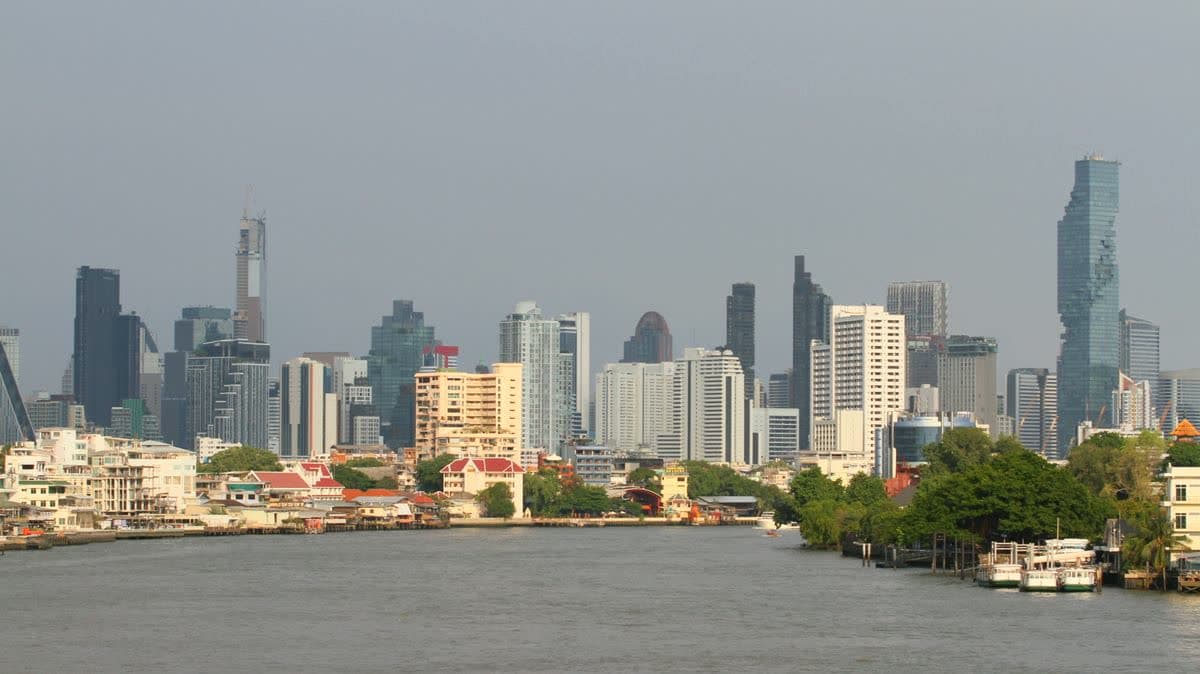
How the account held up our winter
We flew into Phuket for the whole winter. Rented the house ahead of time, paid up front, brought our savings with us — the rest felt like a formality. Then we hit a small thing: a local account. Without one our remote salary kept hanging, mobile banking wouldn't switch on, and rent got paid in cash out of an envelope. We walked into the first big bank we found, and with a tourist stamp they politely turned us away, barely even talking to us. At the second branch the manager nodded along, then asked for proof of address from immigration, a Certificate of Residence we simply didn't have. Move-in stalled for about two weeks. That's when it clicked: it wasn't us and it wasn't bad luck, the rules had changed and we'd shown up unprepared for them.
Why a tourist visa is no longer enough
We figured out later why it works this way. Over the past few years the Bank of Thailand has been tightening customer identification — the KYC checks and source-of-funds rules, the whole anti-money-laundering story. For you it boils down to one thing: as of 2025 major banks generally won't open a new account for a foreigner holding only a tourist visa or a visa-exemption stamp. The bank wants to see you're here for the long haul on a legal basis. This isn't a closed door for foreigners across the board. The bar just went up, and now you have to show the bank early that you're a legible client with long-term plans.
The visa decides almost everything
The smoothest option in the bank's eyes is a Non-B non-immigrant visa with a valid work permit. It answers every question at once: legal employment, income, long stay. But a work permit isn't the only road. You can try to open an account without one, if you hold another long-term visa: marriage (category O), retirement (O-A or O-X), student (ED). What the bank really cares about is different: whether you have a recognized basis to live in the country long-term. Whether you work or not is a secondary question. A couple we know winters on a retirement O-A and opened their account without any fuss, while our first attempt was with no such visa at all, just a tourist stamp.
Documents and the Certificate of Residence
The basic package usually looks like this: an original passport, a suitable long-term visa, proof of a Thai address, a local phone number and an opening deposit, somewhere around 500–2,000 baht. The real headache is the address. The gold standard here is the Certificate of Residence, a residence letter; embassies used to issue it, now it comes from the immigration office. Plenty of applications trip over the address — ours tripped over it at that second branch. An official letter from immigration often turns a manager's decision in your favor. Still, check the exact list for your own case: it drifts from bank to bank, from branch to branch, and depends on your status.
Where to go: which banks are friendlier
In practice foreigners have better odds at banks with a big network and experience with expats. Bangkok Bank is the largest in the country, well over a thousand branches, used to foreign clients — and that's where we opened our account in the end. Kasikorn Bank, or KBank, also has a reputation as foreigner-friendly, with a handy app and international transfers that work. One more observation: things go noticeably easier at main branches in expat- and tourist-heavy areas — Silom and Sukhumvit in Bangkok, central Chiang Mai. English-speaking staff who've seen your case before are more common there. These are pointers from real life, not a promise: a given branch may run its own policy.
Turned down at one branch isn't the end
A rejection at one branch doesn't mean you're ineligible for an account in principle. Often a different branch, or a different bank where the manager sees foreigners more often, is enough. People trip over all sorts of things: an incomplete package, no address letter, language, and the plain mundane one — two branches of the same bank cheerfully ask for different documents. We ran into exactly that: one office had one list, the one next door added an item. When the attempts start piling up, some people turn to service agents who have relationships with specific branches. Variation between branches is ordinary Thai reality, and strategy matters here more than luck.
Timelines: what to realistically expect
If the package is complete and correct, the account often opens on the same visit — they hand you a debit card and set up mobile banking right there. When we finally showed up with everything needed, that's how it went: a couple of hours and done. Delays almost never come down to a slow bank. They come down to missing paperwork. No proof of address or no suitable visa, and the visit turns into reconnaissance instead of opening an account. So it's smarter to put the time into preparing in advance than to circle the branches at random. And build in a buffer: the Certificate of Residence itself is a separate trip to immigration with its own timeline.
How Grand Life helps here
At Grand Life we work on the preparation and support side — the very thing we ourselves were missing at the start. We go through your situation: visa, status, city, what you need the account for. We tell you which document package and which proof of address to assemble in advance, so the bank visit is productive and doesn't turn into a pointless scouting run. We help you figure out which banks and branches treat foreigners more gently, and we walk you through steps like the Certificate of Residence. The decision to open the account still sits with the bank — we don't sway the outcome and don't promise approval, but we take the chaos of preparation off you. Heading to Thailand and need a local account? Send a request and we'll work through your situation step by step.
Related services
Tours to this destination
FAQ
Can I open an account on a tourist visa?+
Generally no longer: as of 2025 major banks usually don't open new accounts on a tourist visa or visa-exemption stamp alone due to KYC rules. A long-term visa is normally required. Branch-level exceptions exist but shouldn't be relied upon.
Do I need a work permit?+
Not necessarily. A Non-B with a work permit is the most reliably accepted, but you can also try on another long-term visa — marriage (O), retirement (O-A/O-X) or student (ED). Requirements depend on the bank and branch.
What is a Certificate of Residence and why does it matter?+
It's a letter confirming your Thai residential address, now issued by the immigration office. It's considered the 'gold standard' proof of address and often helps when an application is stalled over address verification.
What if a bank turns me down?+
A single branch's rejection doesn't mean you're ineligible. Often a different branch or a more foreigner-friendly bank (e.g. large networks in expat areas) helps. Sometimes the reason is simply an incomplete document package.
How long does it take?+
With a complete, correct package the account is often opened during the same visit, along with a card and mobile banking. Delays usually come from missing documents, and getting the immigration address letter is a separate step with its own timeline.
Does Grand Life guarantee the account will be opened?+
No. The bank decides, and we don't influence the outcome. We help prepare documents and proof of address, navigate banks and branches, and support the process so the visit is as productive as possible.